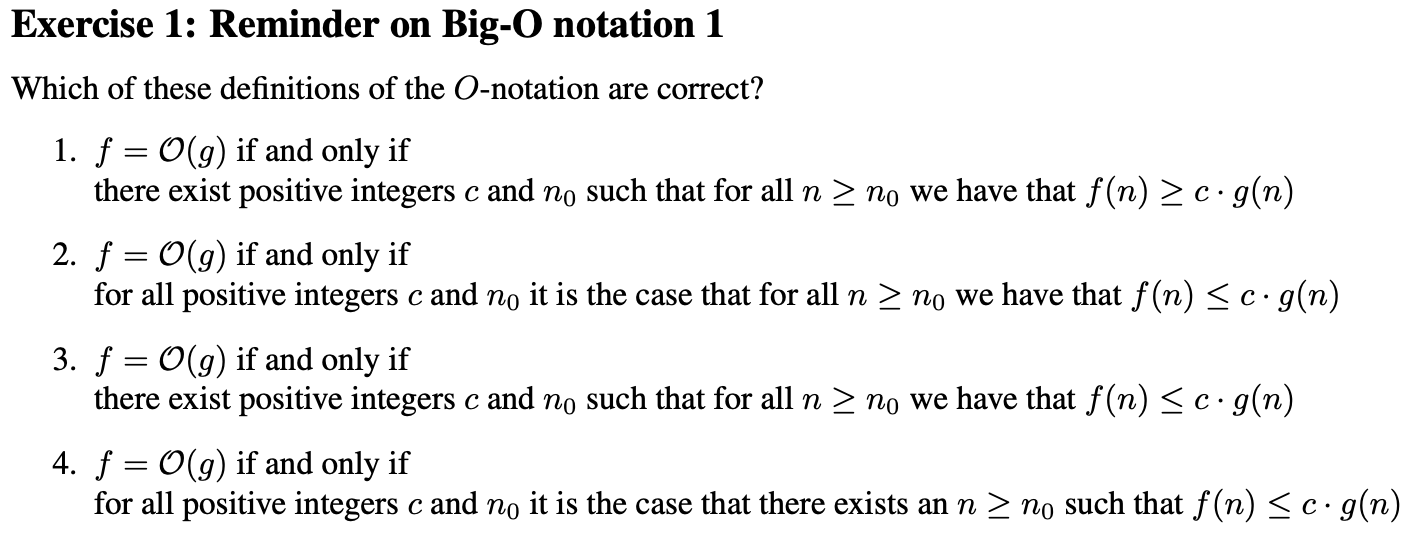
- Wrong. you can always pick a c that is big enough to be larger than f(n)
- Wrong. It says that ALL points need to be bigger, when it just needs to be SOME values that get bigger. E.g if the graph shows two lines. one exponential and the other linear, but the linear one starts out bigger, it would still be the exponentially one that we base our number on.
- Correct.
- Wrong. idk why
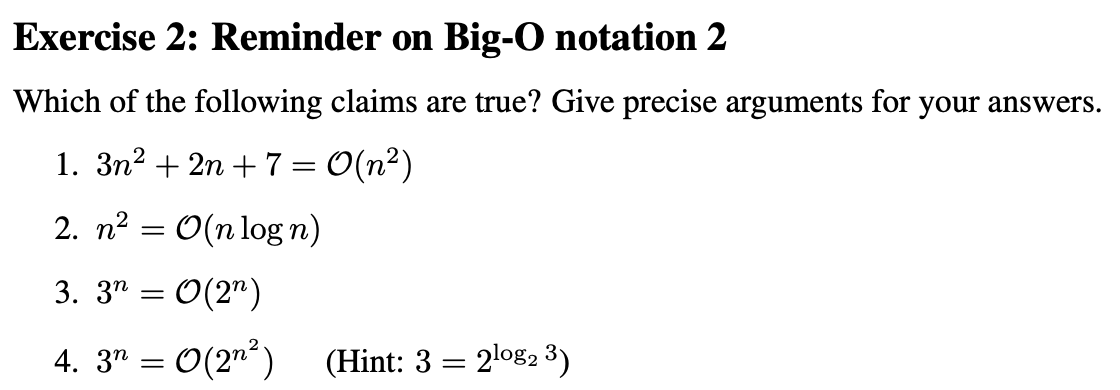
- Correct. Because n2 is the biggest growth
- Wrong. n2 is bigger than n log n, so it cant be.
- Wrong same as in answer 2
- Correct. because the left side of the = is smaller than the right side. and since the right side is big O it can always be bigger.
-
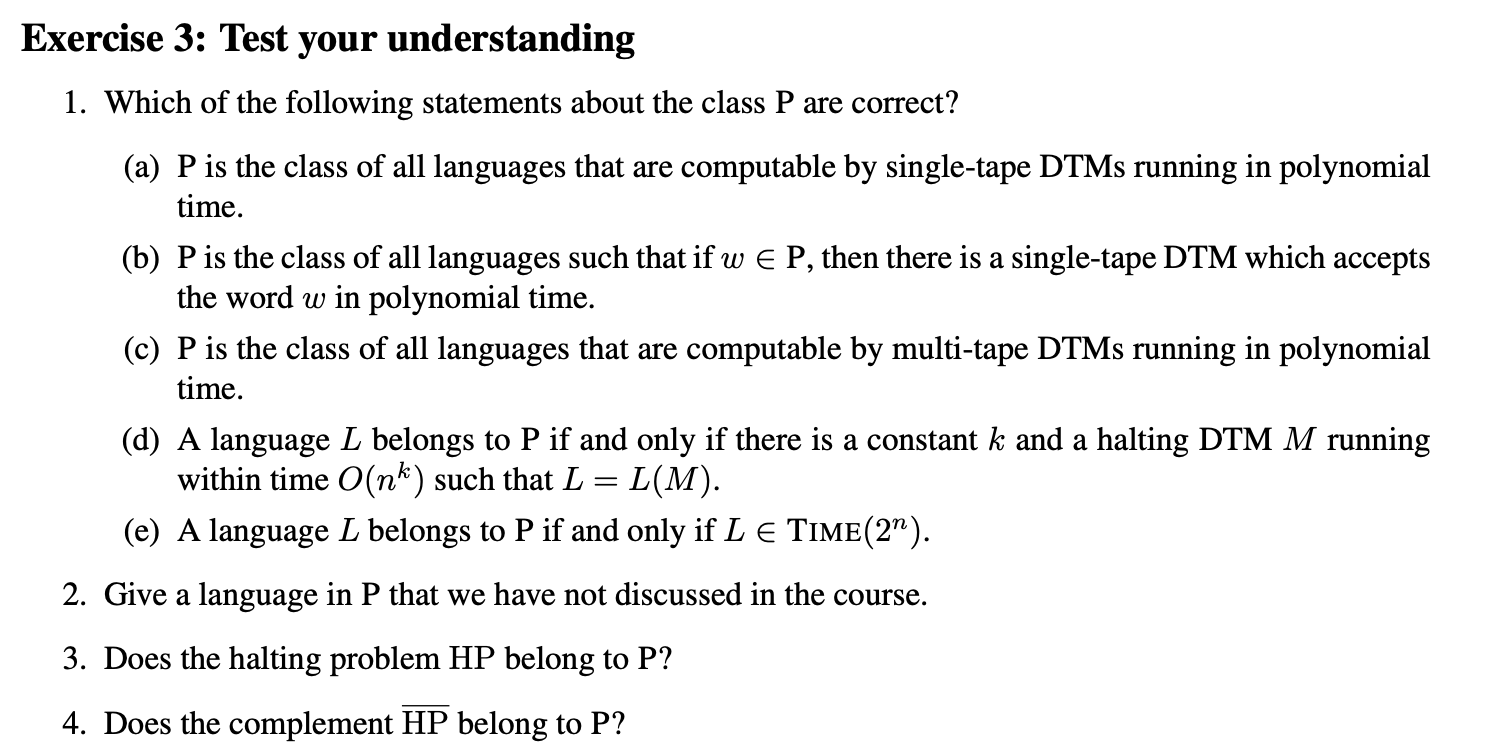
- Correct
- Wrong. Because p is a language, or languages the expression w in p cannot be correct.
- Correct. any tape, be it single or multi tape are done in polynomial time. But multi tapes are quadratically faster.
- Correct
- Wrong. it should be nk and not 2n
- p languages are just languages that have a good running time.( not exponential ).
- The empty language has a really good running time.
- Every regex (probably a regular lanuge)
- Same for every context-free language.
- No
- No because P only contains computable languages
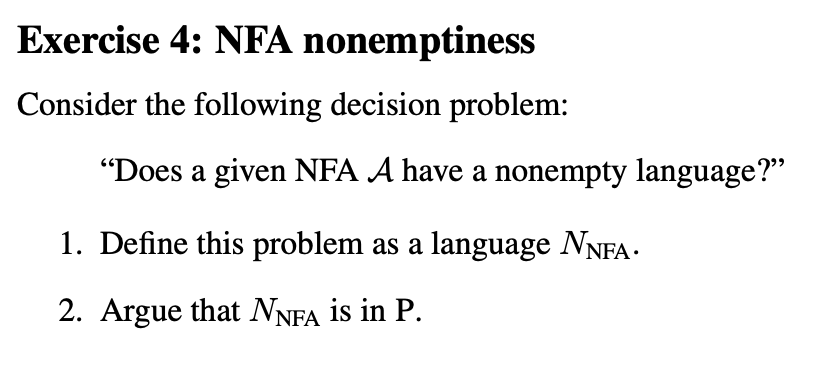
- no
- Because every step here can be done in polynomial time it must polynomial time. The only thing that isnt included in p is an empty NFA.
