- Timed processes
- Buffers with bounded delays
- Multiple clocks
- Composition
- Timed-based protocols
- Timed automata
- Zone-based symbolic analysis
Exercise 1
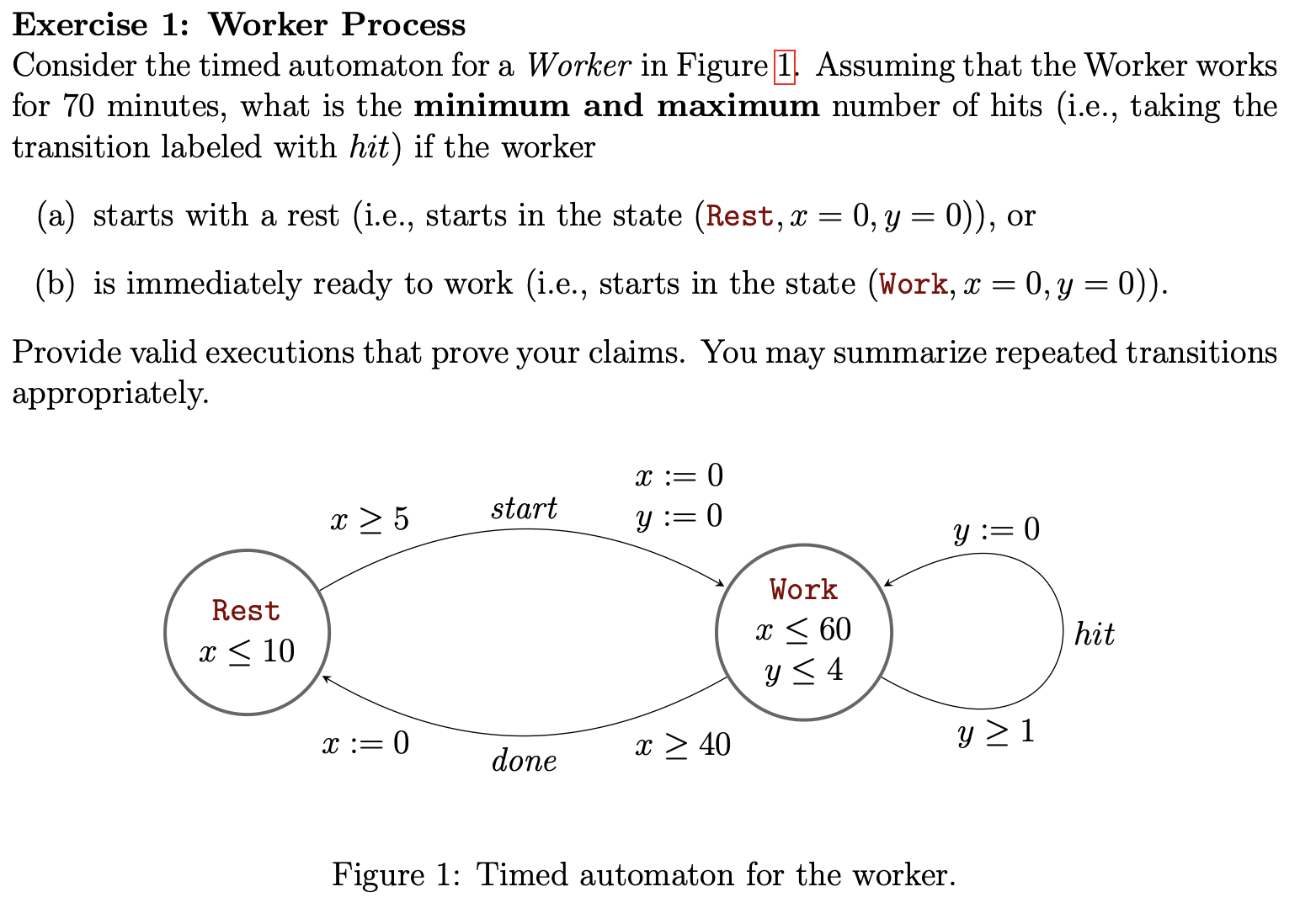 A)
At a minimum it is 11 hits because it can stay in rest for 10 before getting kicked off, and then work once every 4 minutes (y kicks it into hit), afterwhich it rests for another 10 minutes, and then works for the remanining 10 minutes (every 4 minutes it does a hit)
A)
At a minimum it is 11 hits because it can stay in rest for 10 before getting kicked off, and then work once every 4 minutes (y kicks it into hit), afterwhich it rests for another 10 minutes, and then works for the remanining 10 minutes (every 4 minutes it does a hit)
At a maximum it can be 60 if starting at rest. Because after 5 minutes before it jumps into work, and then can stay at work for a maximum of 60 minutes (because y resets) and then is forced into rest again for the remaining 5 minutes.
B)
At a minmum it will be 13 hits, because it works for 40 minutes (40/4=10) but instead of hitting on the last transition it goes to rest instead (10-1=9) then it rests for 10 minutes, and works for the remaning 20 (20/4 -1 = 4) so 13
at a maximum 65 because it works for 60 minutes, rests for 5, and then works for the remaining 5 minutes which is 65
Exercise 2
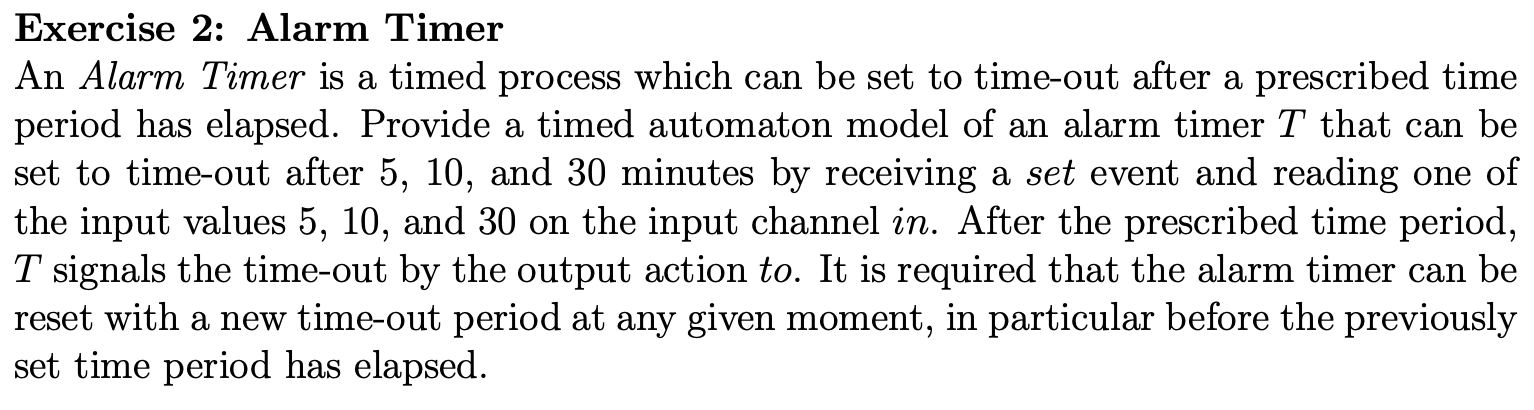
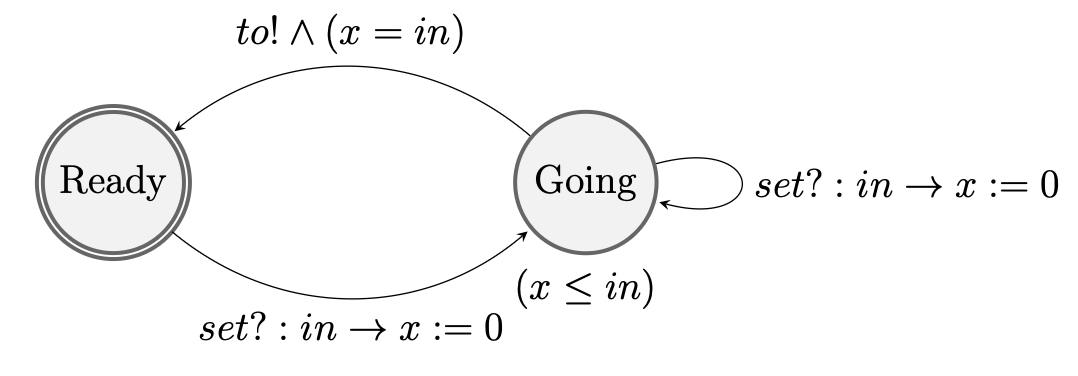
remember that x goes up by 1 every minute (like in the last task)
Exercise 3
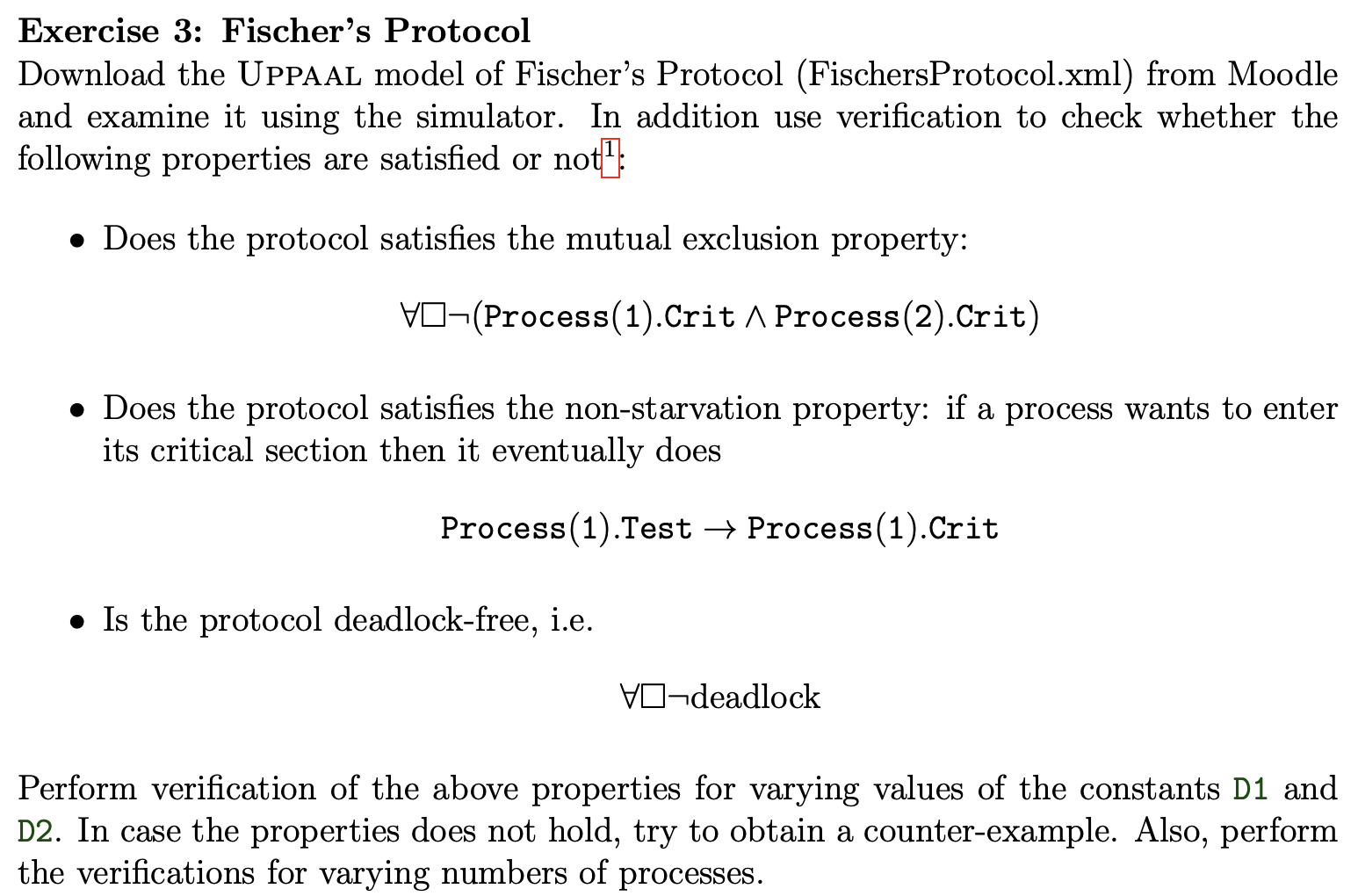
 (remember to have an arrow be this
 -->instead of this ->)
Exercise 4

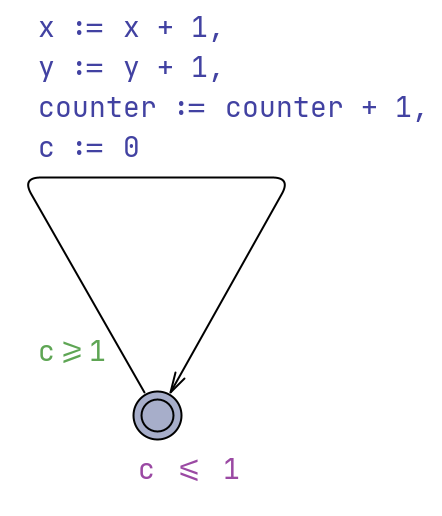
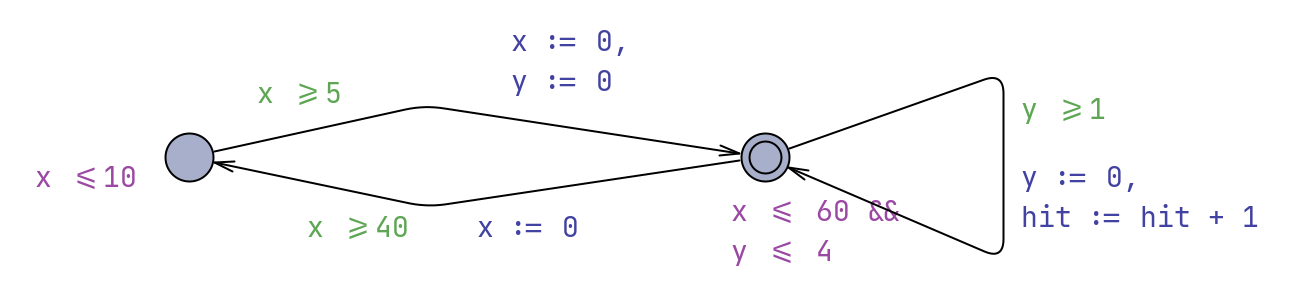
More information on UPPAAL Model Notes
Exercise 5
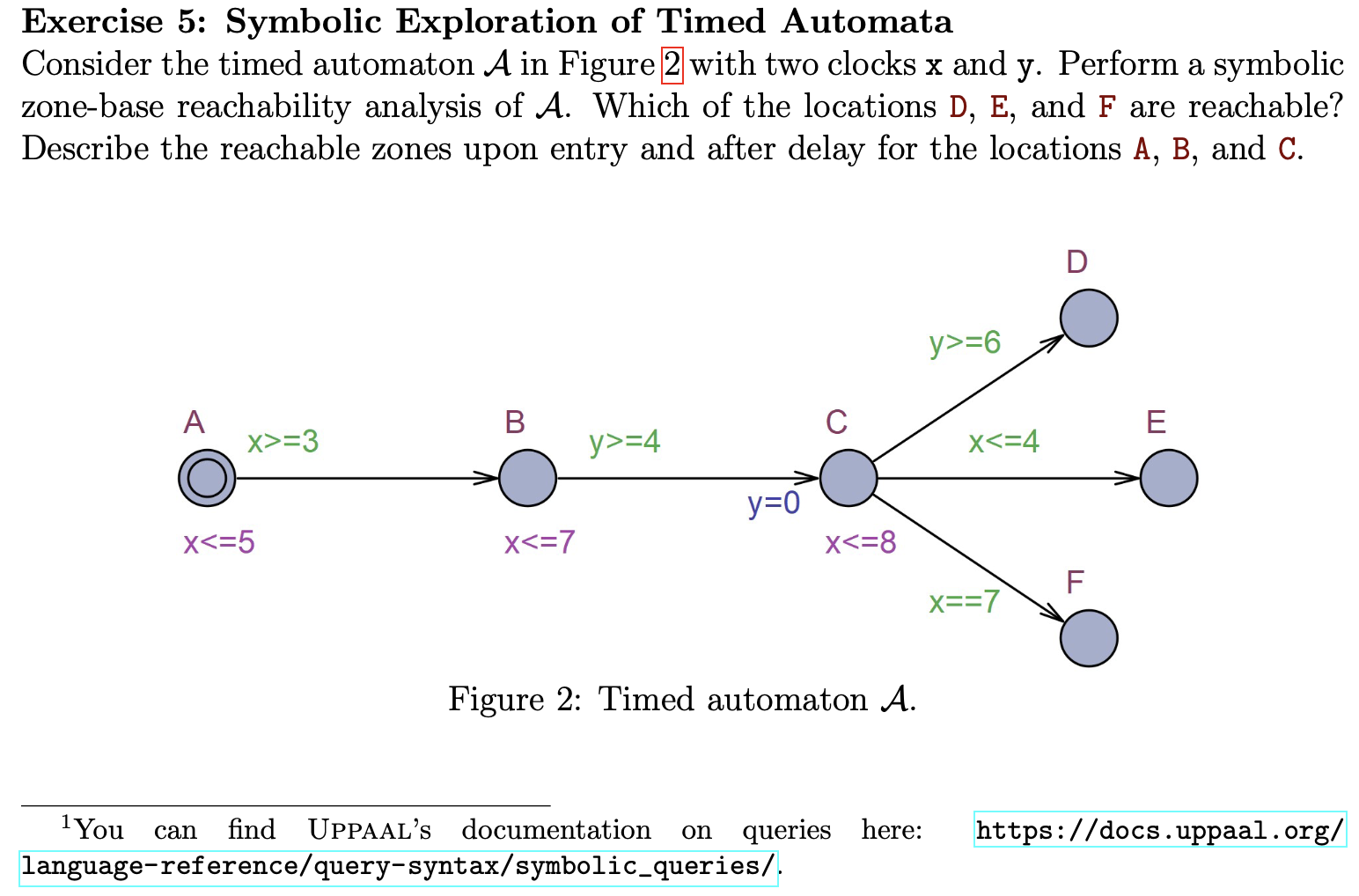
what values can A,B, and C have? A:
What value can A have? (delay)
0 <= x <= 5
0 <= y <= 5
What is the entry state from A to B?
3 <= x <= 5
3 <= y <= 5
B:
What value can B have? (delay)
3 <= x <= 7
3 <= y <= 7
What is the entry state from B to C?
4 <= x <= 7
0 <= y <= 0
C: what values can C have? (delay) y gets reset to 0, which means that if we try counting y up to 6 (or more), x would then be 9 (the minimum which is 3 + 6 = 9) but x can AT MOST be = 8 because of the invariant.
4 <= x <= 8
0 <= y <= 4
which ultimately means that everything except D is NOT reachable.